


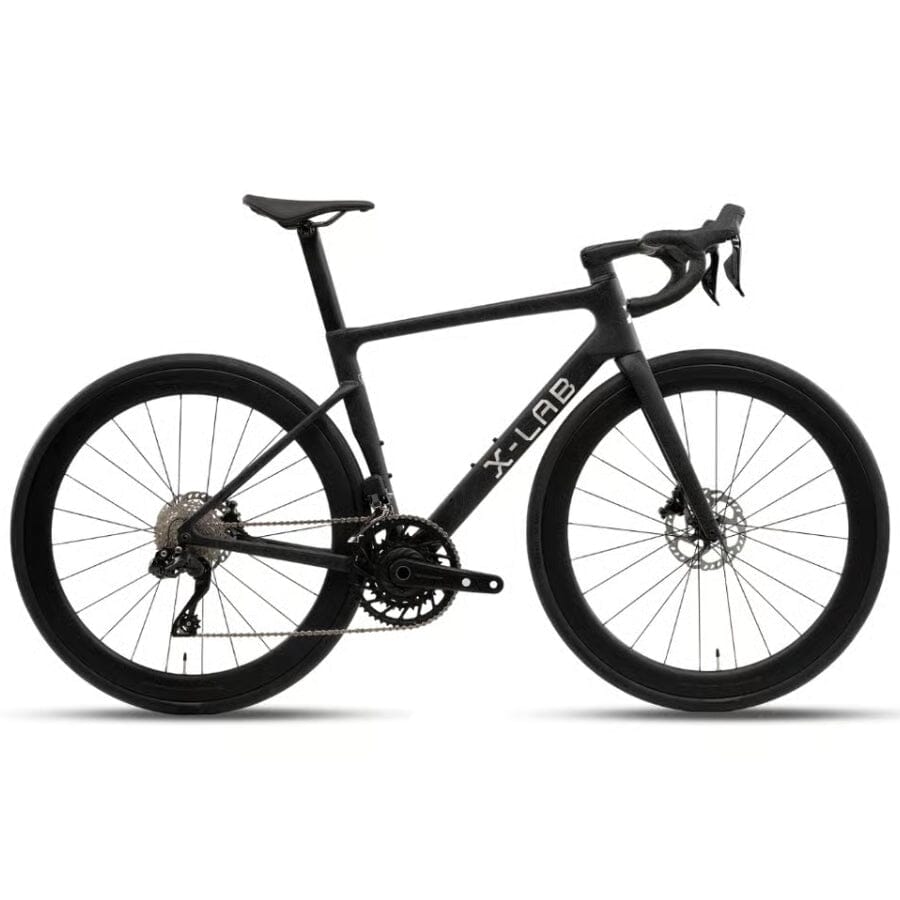
XDS X-Lab
RS7 Di2
Frame – XDS Carbon Frame, Toray T700 Drivetrain – Shimano 105 Di2 Wheelset – Branta C45 Base Carbon Wheelset, Stainless Steel Spokes

Since arriving in the U.S., XDS X-LAB has quickly gone from a relatively unknown name to gaining considerable attention in the cycling market. Much of that interest comes from bikes like the RS7, where the combination of price and specification can almost seem too good to be true. X-LAB has also established credibility at the highest level of the sport, with XDS Astana racing the AD9 on the WorldTour.
Unlike many brands competing on value through a direct-to-consumer model, X-LAB pairs competitive pricing with full local bike shop support.
Rather than covering the full X-LAB lineup or company history, this journal focuses on the RS7 itself. The RS7 sits between a traditional endurance bike and a more aggressive race bike, combining performance-road geometry with a slightly more approachable fit and greater versatility. Geometry, sizing, and comparisons with familiar road bikes help define exactly where the RS7 fits.
From ten feet away, the X-LAB RS7 looks every bit like a modern race bike. Deep-section Branta carbon wheels, a one-piece carbon cockpit, dropped seatstays, and aero-influenced tube shapes give it the visual language and equipment normally associated with performance road bikes.
The distinction comes from the geometry and intended use. Rather than chasing an uncompromising race-bike brief, the RS7 pairs race-inspired performance with a more approachable riding position intended to remain comfortable and stable over longer rides. That places it closer to a performance-oriented endurance bike than a pure race platform.
The result is a bike that carries much of the look and equipment of a race bike into a package designed to be easier to live with every day.
At a glance, sizing on the RS7 looks fairly conventional. X-LAB uses XS through XXL rather than relying solely on traditional centimeter sizing, although each size is also given a nominal centimeter equivalent. Those numbers do not necessarily translate directly across brands.
From Contender's experience it has shown that for riders who might be in-between sizes, sizing up is common on the RS7, although stack, reach, and individual fit remain far more useful than the letter or nominal size printed on the frame.
| Measurement | XS | S | M | L | XL | XXL |
|---|---|---|---|---|---|---|
| Seat Tube Length (mm) | 420 | 440 | 470 | 490 | 510 | 530 |
| Top Tube Length (mm) | 500 | 515 | 531 | 550 | 570 | 590 |
| Head Tube Length (mm) | 130 | 135 | 145 | 160 | 175 | 200 |
| Seat Tube Angle (°) | 75° | 75° | 75° | 74° | 74° | 74° |
| Head Tube Angle (°) | 70° | 72° | 73° | 73° | 73° | 74° |
| Chainstay Length (mm) | 410 | 410 | 410 | 410 | 410 | 410 |
| Wheelbase (mm) | 973 | 976 | 982 | 993 | 1006 | 1016 |
| Bottom Bracket Drop (mm) | 72 | 72 | 70 | 70 | 68 | 68 |
| Stack (mm) | 526 | 535 | 546 | 561 | 574 | 602 |
| Reach (mm) | 360 | 370 | 380 | 390 | 400 | 412 |
| Front Center (mm) | 574 | 577 | 581 | 593 | 606 | 616 |
| Standover (mm) | 737 | 752 | 772 | 789 | 807 | 830 |
The 2026 SCOTT Addict offers a useful comparison. A medium RS7 measures 546 mm of stack and 380 mm of reach, placing it much closer dimensionally to a size 52 Addict at 557 mm and 382 mm than a size 54 Addict at 578 mm and 386 mm. Geometry comparison tools such as Bike Insights can make these differences easier to visualize by overlaying frames rather than relying on nominal sizing alone.
X-LAB also adjusts several components across the six-size range. Crank length progresses from 165 mm on XS and S frames to 170 mm on M and L, then 172.5 mm on XL and XXL. Handlebar width ranges from 360 mm on the smallest sizes to 400 mm on the largest, while stem length, fork offset, and seatpost length also change with frame size.
| XS | S | M | L | XL | XXL | |
|---|---|---|---|---|---|---|
| Fork Rake/Offset (mm) | 55 | 55 | 45 | 45 | 45 | 45 |
| Trail (mm) | 65 | 58 | 62 | 60 | 58 | 52 |
| Handlebar (mm) | 360 | 360 | 380 | 380 | 400 | 400 |
| Stem (mm) | 90 | 100 | 110 | 110 | 120 | 120 |
| Crankset (mm) | 165 | 165 | 170 | 170 | 172.5 | 172.5 |
| Seat Post (mm) | 300 | 300 | 300 | 350 | 400 | 400 |
These details show attention being paid to the complete fit of the bike rather than simply scaling the frame around the same components.
The RS7 occupies similar territory to bikes such as the SCOTT Addict and Cervélo Caledonia, combining an approachable fit with performance-road intentions. Where the RS7 separates itself is the value. X-LAB’s in-house Branta components allow carbon wheels, an integrated carbon cockpit, and a power meter to fit into a package that costs substantially less than many established competitors.
The RS7 is available with both Shimano 105 mechanical and 105 Di2 drivetrain options, creating two price points around the same carbon frame and much of the same Branta component package. The Di2 version provides the clearest comparison with similarly equipped bikes such as the Cervelo Caledonia 105 Di2.
Beyond the lower price, the RS7 still differs from the Caledonia or the Addict. These other platforms bring some advantages beyond the headline component list. The Addict offers up to 38 mm tire clearance, integrated storage, and a frame developed around compliance, while the Caledonia offers 36 mm clearance, fender mounts, and service-friendly features such as a threaded bottom bracket and flexible cable routing.
The RS7 is more road-focused, with 32 mm maximum tire clearance, and much of its value comes from X-LAB’s vertically integrated component ecosystem. Branta wheels, cockpit, crankset, power meter, and other components allow more of the complete bike to remain within the X-LAB family rather than relying on higher-cost third-party components.
The result is a different value proposition. The RS7 places a high level of equipment within reach at its price, while bikes such as the Addict and Caledonia put more of their value into chassis refinement, versatility, serviceability, and long-term platform development.
XDS X-Lab
Frame – XDS Carbon Frame, Toray T700 Drivetrain – Shimano 105 Di2 Wheelset – Branta C45 Base Carbon Wheelset, Stainless Steel Spokes
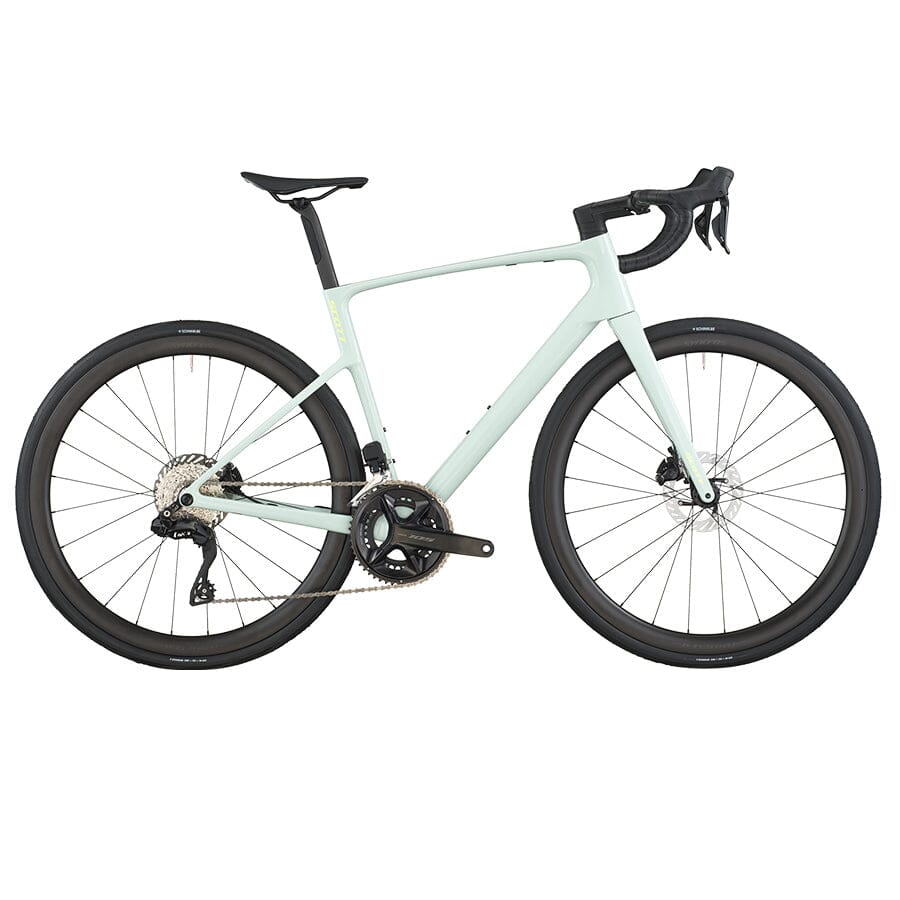
SCOTT
Frame - SCOTT Addict HMF carbon Drivetrain - Shimano 105 Di2 Wheelset - Syncros Capital 1.0 40 Disc
The RS7 sits within the X-LAB lineup as the approachable, do-it-all performance road bike. Fast group rides, long weekend miles, and the move up from an entry-level road bike all fit comfortably within its intended use.
The rest of the performance range remains relatively easy to understand. The GT8 handles gravel, the RT9 prioritizes low weight, the AD9 serves as the WorldTour-level race platform, and the AD8 brings much of that race-focused design into a more attainable package. The RS7 occupies the more everyday end of the road range, while the RS5 moves further toward comfort and utility.
Each platform currently has a fairly distinct purpose, leaving the RS7 with a clear position: performance-road features and styling without the aggressive focus of the AD8 or AD9.
The RS7 makes the most sense as someone's first serious road bike or as a substantial step up from an entry-level platform. Rather than reaching a lower price point by stripping away the features that shape the riding experience, the RS7 starts with a carbon frame, carbon wheels, an integrated cockpit, and a power meter. It is currently offered with Shimano 105 mechanical and 105 Di2 drivetrain options.
Entry-level bikes can sometimes create limitations almost as quickly as they create an entry into the sport. Basic drivetrains, heavier wheelsets, limited tire options, and components that quickly become upgrade targets can add cost and frustration as riding progresses.
The RS7 provides a much more complete starting point, with enough performance and capability to not require upgrades down the road. It makes a modern performance road bike more attainable and provides an experience that never feels entry level.

